Practical guide · Regulation
Business Manager Visa 2026: All the New Rules, Plain and Simple
Capital multiplied by six, a mandatory employee, JLPT N2 required. What the October 2025 reform changes for any business project in Japan.
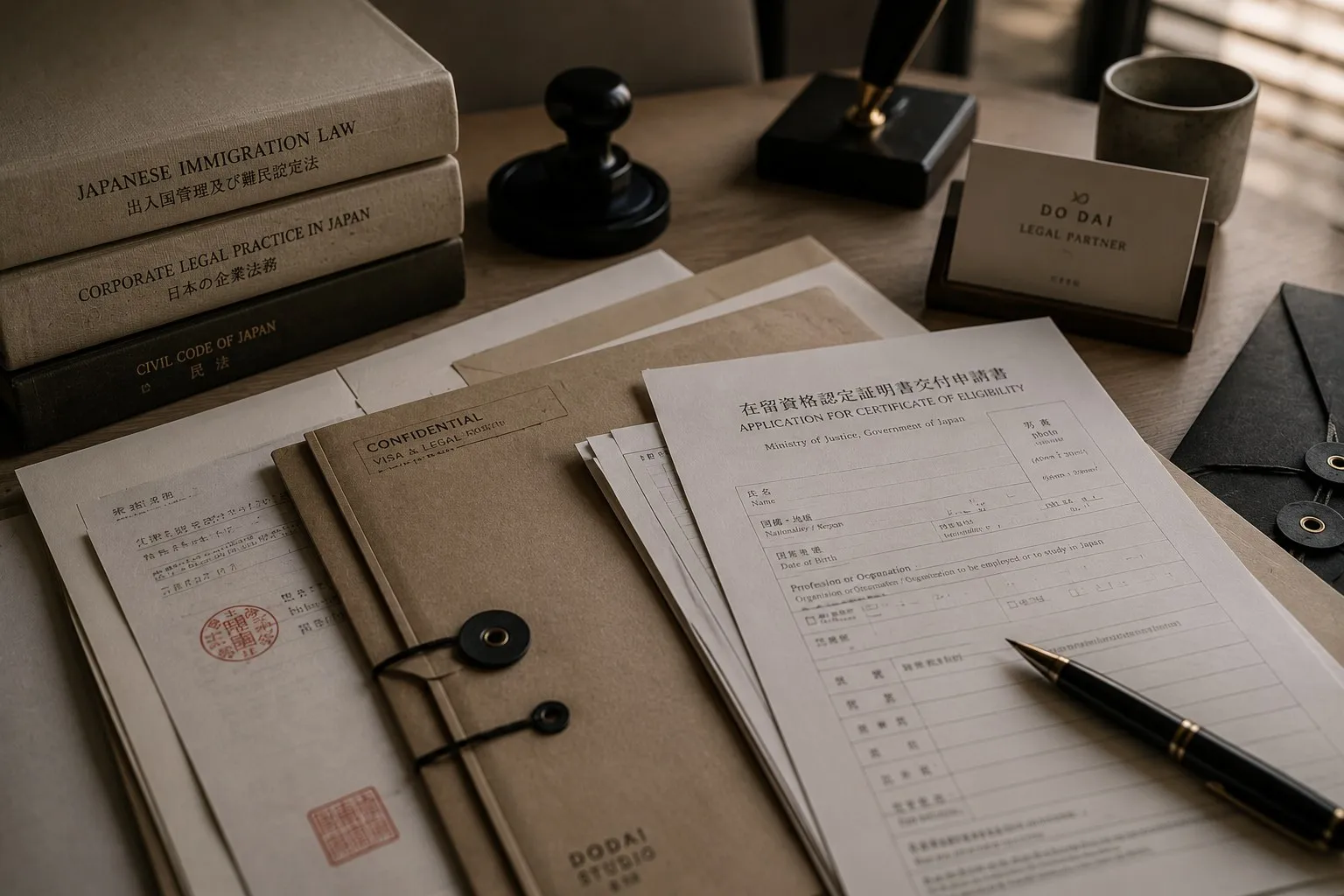
On 16 October 2025 the Japanese government quietly overhauled the Business Manager visa, the one that lets a foreign entrepreneur set up and run a company in Japan. Applications fell from around 1,700 a month to fewer than 70, a drop of 96%. Here is what changed, requirement by requirement.
Requirement 1, capital of 30 million yen
Before October 2025, 5 million yen was enough. It now takes 30 million, about 203,000 dollars, paid into the share capital of the Japanese company.
That money can fund part of the project, space, renovation or equipment, but its origin has to be proven and documented. For many food and beverage projects the threshold changes everything: a small restaurant on a total budget of 15 to 20 million becomes mechanically impossible without a further investor.
Requirement 2, one full-time employee
The old regime offered a choice: hire an employee or invest 5 million yen. Since the reform, hiring at least one Japanese national or permanent resident full time is mandatory, whatever the capital.
In food service, where the country has 1.29 million unfilled positions in 2026, that obligation is not an administrative formality. It is a permanent cost line to fill before the doors even open.
Requirement 3, Japanese at JLPT N2
The main applicant must show JLPT N2, the equivalent of CEFR B2: following a professional conversation, reading an administrative document, holding your own in a meeting.
For a beginner, N2 means eighteen to twenty-four months of sustained study. That requirement alone rules out a share of the founders who until now managed with a bilingual accountant.
Requirement 4, a business plan verified by an expert
The business plan is no longer a declaration. It has to be reviewed and validated by an expert, a certified accountant, consultant or lawyer, and the authorities now check the economic credibility of the project, not just whether the file is complete.
The authorities no longer read an intention. They read a business model.
Requirement 5, a dedicated physical office
A real space, with a commercial lease in your name or the company's. No home address, no generic coworking desk, no post box.
For a restaurant project the trading premises satisfy this. For a consulting or trading company it is a new cost line to carry in the plan from year one.
The timeline, four to ten months
Review times have lengthened since the reform: files are read closely, and an incomplete one goes round again.
| Stage | Duration |
|---|---|
| Preparation, company, plan and capital | 2 to 3 months |
| Filing with the Immigration Bureau | 1 week once the file is complete |
| Review of the file | 1 to 3 months |
| Certificate of Eligibility | 4 to 6 months after filing |
| Visa application at the embassy | 1 to 2 weeks |
| From first document to visa in hand | 6 months minimum |
This timeline governs everything else. Signing a lease before the Certificate of Eligibility arrives means paying rent for months on premises you are not allowed to trade from.
If you already hold the visa
You are not affected immediately: a transitional period is in place. But at renewal, every one to three years depending on the case, the new rules will apply progressively, across several cycles according to Baker McKenzie's February 2026 analysis.
If your visa was granted before October 2025 on 5 million yen and no employee, compliance is prepared now, not on the day you file the renewal.
What this changes for a Food & Beverage project
| Requirement | Before October 2025 | Since October 2025 |
|---|---|---|
| Minimum capital | 5 million yen | 30 million yen |
| Employee | optional against capital | one full-time post required |
| Japanese | not required | JLPT N2 |
| Business plan | self-declared | verified by an expert |
| Office | a simple address accepted | dedicated commercial premises |
In practice: a couple could open a small restaurant on 12 to 15 million yen, run it between them and get by without fluent Japanese. The same project today needs 30 million in capital, a Japanese employee and JLPT N2. The entry ticket has tripled.
This is not bad news for everyone. The barrier filters out undercapitalised projects, which were also the ones closing within the year. It does demand real financial backing and a file that stands up on first reading.
Building that file and the business plan behind it is what we do on every opening.Opening in Japan
Sources
- Baker McKenzie, Japan Revises Business Manager Visa Requirements, February 2026
- YOLO Japan, Major Changes to Japan's Business Manager Visa, 2026
- VisaJapan.jp, the 2025 revision explained
- Shareuhack, Japan Business Manager Visa 2026 Guide
- Ministry of Justice, Immigration Bureau data, 2025 and 2026
- Ministry of Labour, hospitality employment statistics, 2026

The letter
土台 Journal, every week.
The restaurants and shops that have just opened in Tokyo, found on foot. Past issues are readable in full, with no sign-up.
Read next

Practical guide
Japan's tax-free shopping changes on 1 November 2026: what retailers need to know
On 1 November 2026, Japan switches to a refund system for tax-free shopping. Tourists pay the tax at the till and get it back once customs has checked their purchases. A shop, a department store or a foreign brand that sells to visitors will have to change how it prices, refunds and reports each sale.

Practical guide
Pop-Up Store in Tokyo: The Complete 2026 Guide
From a gallery rented for a weekend to a department store stand: the pop-up formats in Tokyo, the venues and their rates, what you can settle without a Japanese company, and the timeline to plan.
Practical guide
Your head office is abroad: the five ways to open in Japan
Subsidiary, branch, representative office, master franchise, joint venture. What each form changes for the lease, the licences and the money.
A guide informs. A project needs a closer look.
Let's look at yours.
Book a 30-min callA costing rather than a conversation? Request a quote