Practical guide · Structure
Your head office is abroad: the five ways to open in Japan
Subsidiary, branch, representative office, master franchise, joint venture. What each form changes for the lease, the licences and the money.
Your brand has a head office, in Paris, London, Kuala Lumpur or New York. The first question is not where to open in Japan, but in what form. Many brands look for a location before settling this, and regret it: the structure decides who signs the lease, who holds the licence, who answers when things go wrong, and how money returns to the parent.
The five forms, on one page
There are five ways to operate in Japan from a foreign company, plus a sixth that consists of not opening at all. They are not equivalent, and the choice rests on three criteria: the capital you accept to lock up, the control you want to keep, and the horizon you are aiming at.
Here is what each of them covers.
- The Japanese subsidiary: a company under Japanese law, KK or GK, owned by the parent. A full entity: it signs, holds licences, hires, pays its taxes in Japan. The option for those who really mean to settle.
- The branch office: the parent itself, registered to operate in Japan. No separate entity, and unlimited liability for the parent. Suits distribution or liaison, rarely the opening of a venue.
- The representative office: the lightest form. It studies, meets, tests. It does not sell, invoice or contract. It is the tool of the study phase, and nothing else.
- The master franchise: a Japanese operator opens and runs under your name against royalties. They carry the investments, you collect and control quality.
- The joint venture: a Japanese company held with a local partner. You bring the concept, they bring the ground and the network.
The table that settles it
Placed side by side, the five forms separate quickly. This table does not say which is best, it says which matches what you are looking for.
| Criterion | Subsidiary | Branch | Rep. office | Master franchise | Joint venture |
|---|---|---|---|---|---|
| Japanese entity | Yes | No | No | No | Yes |
| Liability | Limited | Unlimited | Parent | Limited to royalties | Shared |
| Capital deployed | High | Medium | Low | None | Medium |
| Brand control | Total | Total | Total | Indirect | Shared |
| Speed of entry | Medium | Fast | Fast | Fast | Medium |
| Best for | Opening venues | Distribution | Market study | Capital-light growth | Large joint project |
One useful reading: the capital column and the control column always move in opposite directions. No form gives total control without locking up capital. Anyone promising otherwise is selling something.
Master franchise, the model on the rise
This is the fastest-growing model among international brands, and the clearest recent case is Krispy Kreme. Present in Japan for twenty years in direct operation, the brand sold its Japanese operations in December 2025 to Unison Capital for $65 million, and is switching to a master franchise.
Read that move carefully: a brand that built its market directly for twenty years decides to stop carrying the costs, while keeping a hand on its image. It is not a retreat, it is a change of trade. You move from operator to licensor.
The limit is real and fits in one sentence: your brand in Japan will be worth exactly what your partner is worth. A bad master franchise damages a reputation in months, and you will not have your hands in the service to see it coming.
The joint venture, and the question of the exit
The best-known case is Starbucks. For its entry into Japan in 1995, the brand created a joint venture with Sazaby League, a Japanese retailer that knew the market perfectly. The venture carried the national expansion, and Starbucks bought out every share in 2014 for $913 million, when the time came to take back control.
The joint venture is the right choice when the partner brings something real, a network of locations, supplier knowledge, operating capacity, and when the project is too large for a simple licence. It is the wrong choice when you sign one for reassurance.
A well-negotiated joint venture plans its exit on day one. The others discover it too late.
That is the point almost everyone neglects. Starbucks could buy out because the buy-out was planned. Many others found their venture had become a prison, with a partner who had no reason at all to sell.
What the structure changes in practice
Three very practical things depend directly on this decision, and they are what stalls projects when the choice was made lightly.
- The bank account: Japanese banks require a registered Japanese entity to open a corporate account. This is often the practical reason, more than the legal one, that pushes brands toward the subsidiary.
- The licences: an operating licence is issued to a Japanese entity for a specific location. The subsidiary fits the normal framework, the branch may face restrictions depending on the sector.
- The visas: a subsidiary can employ directly and sponsor an intra-company transfer visa. It is the simplest vehicle to bring a manager over from the parent.
These three points explain why the subsidiary dominates in practice, despite its cost. It is not the most elegant form on paper, it is the one that unblocks daily life.
Five questions before choosing
There is no universally good structure. There is the one that matches your situation, your budget and your horizon. These five questions settle most cases.
- Do we want to operate ourselves, or have a partner operate?
- Are we ready to lock up capital in Japan, and for how long?
- Do we need total control over image and execution?
- What is our horizon: test the market, or build an asset?
- Who knows the ground on our side, and how well?
None of this is fixed. Krispy Kreme started direct and is switching to franchise twenty years on. Starbucks entered through a joint venture and bought out its partner. Today's choice is not a lifetime commitment, but it should be made with open eyes.
Sources
- JETRO, Setting Up Business in Japan, guide officiel
- Loi japonaise sur les sociétés, articles 817 à 823, régime de la succursale
- Global Law Experts, Japan Branch Office vs Subsidiary
- Export to Japan, la succursale comme extension de la maison mère
- World Coffee Portal, Krispy Kreme cède ses opérations japonaises à Unison Capital, décembre 2025
- Tasting Table, la coentreprise Starbucks et Sazaby League, 1995 puis 2014
- One Step Beyond, franchising in Japan for global brands
Frequently asked questions
What is the difference between a subsidiary and a branch?
The subsidiary, KK or GK, is a distinct Japanese company owned by the parent. The branch is the parent itself, registered to operate in Japan, with unlimited liability falling on the parent.
Can I open a restaurant through a branch office?
It is possible depending on the sector, but operating licences are issued to a Japanese entity and some activities restrict branches. To open a venue, the subsidiary is almost always the better choice.
What is a representative office for?
For studying the market: meeting partners, gathering data, running tests. It cannot sell, invoice or contract in its own name. It is the tool of the study phase, not of operations.
How does master franchise work in Japan?
The brand grants a Japanese operator the right to open under its name against royalties. The operator carries the investments, the premises and the staff. Krispy Kreme has been moving to this model since December 2025.
Do I need a Japanese partner to enter Japan?
No. A foreign brand can set up a wholly owned subsidiary without a partner. A joint venture or a master franchise are strategic choices, not legal obligations.

The letter
土台 Journal, every week.
The restaurants and shops that have just opened in Tokyo, found on foot. Past issues are readable in full, with no sign-up.
Read next
Practical guide
Japan's tax-free shopping changes on 1 November 2026: what retailers need to know
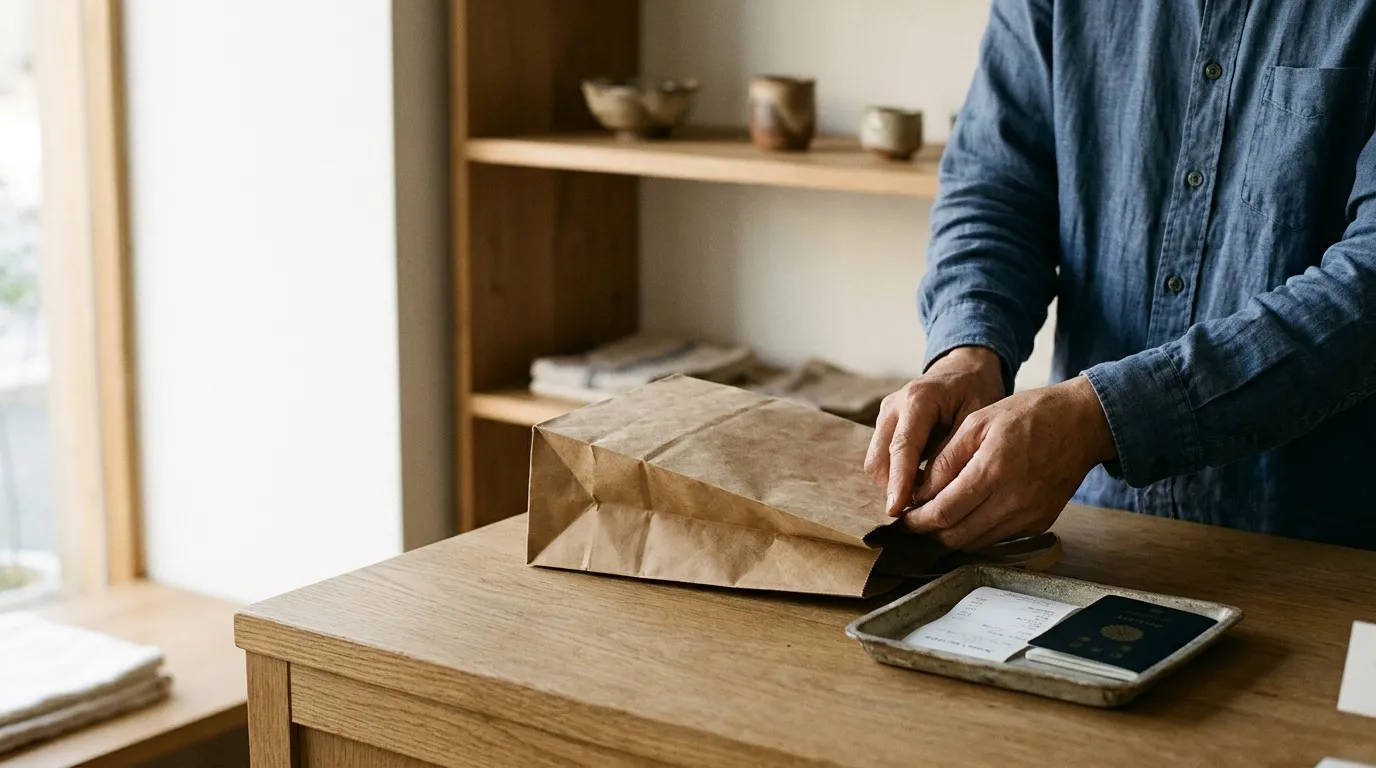
On 1 November 2026, Japan switches to a refund system for tax-free shopping. Tourists pay the tax at the till and get it back once customs has checked their purchases. A shop, a department store or a foreign brand that sells to visitors will have to change how it prices, refunds and reports each sale.

Practical guide
Pop-Up Store in Tokyo: The Complete 2026 Guide
From a gallery rented for a weekend to a department store stand: the pop-up formats in Tokyo, the venues and their rates, what you can settle without a Japanese company, and the timeline to plan.
Practical guide
How to open a coffee shop in Japan: the complete 2026 guide
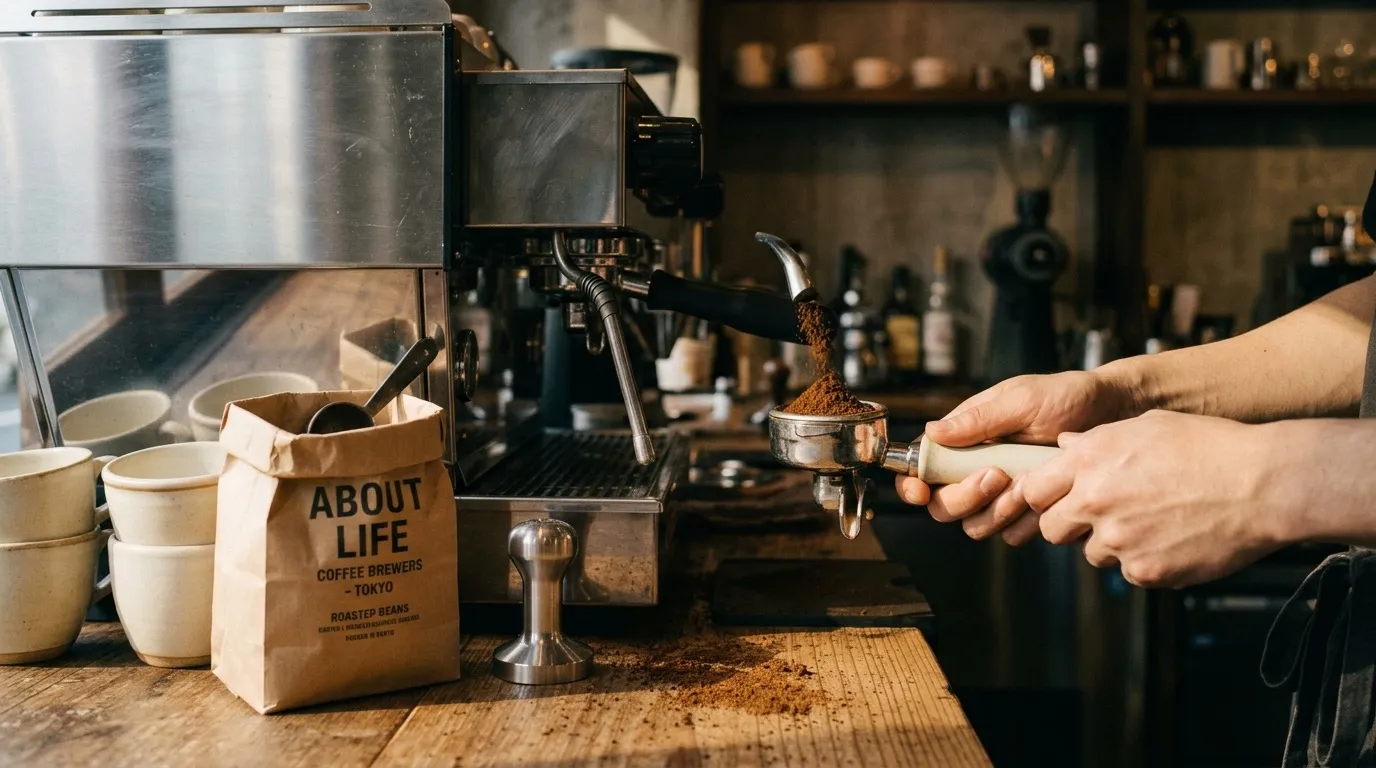
From takeaway kiosk to roastery café: the formats, the real costs, the licences, the equipment and the traps specific to the Japanese market.
A guide informs. A project needs a closer look.
Let's look at yours.
Book a 30-min callA costing rather than a conversation? Request a quote