Practical guide · Tax-free
Japan's tax-free shopping changes on 1 November 2026: what retailers need to know
On 1 November 2026, Japan switches to a refund system for tax-free shopping. Tourists pay the tax at the till and get it back once customs has checked their purchases. A shop, a department store or a foreign brand that sells to visitors will have to change how it prices, refunds and reports each sale.
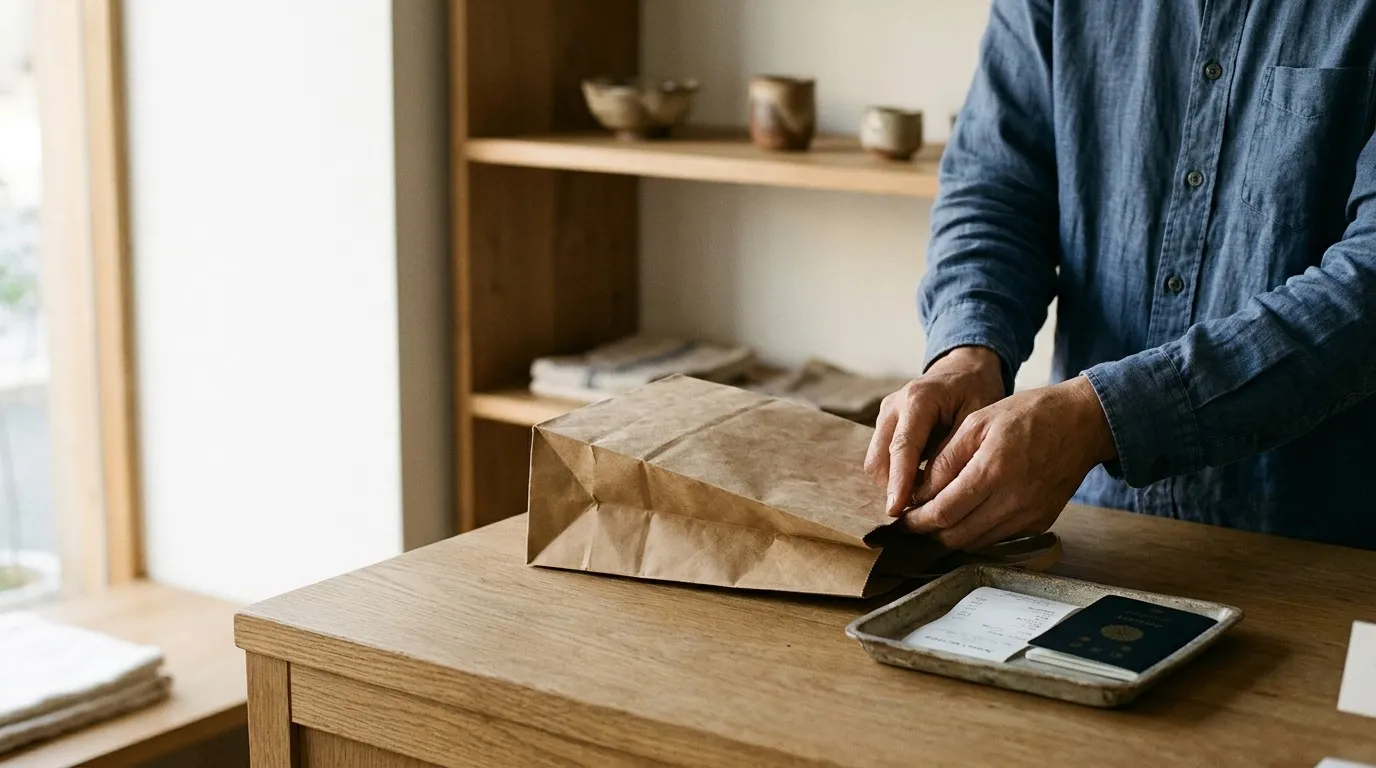
On 1 November 2026, a shared tax-free counter opens in the basement of the Shin-Marunouchi Building in Tokyo. According to its operator, Mitsubishi Jisho Property Management, it will handle the paperwork for 52 stores spread across 9 buildings in the Marunouchi district. It opens on the same day Japan changes its tax-free regime.
Three key points
From that date, a tax-free shop no longer sells tax-exempt to tourists. It charges the tax-inclusive price, sends the sale details to the tax authority, and refunds the 10% consumption tax to the customer once customs confirms, as the customer leaves Japan, that the goods are going out of the country. The authorities call this the refund method, rifando hōshiki (リファンド方式).
- From 1 November 2026, the store collects the tax and refunds it after the customs check, which must take place within 90 days of purchase. There is no transition period: sales made on 31 October stay under the old regime, and sales from 1 November fall under the new one (National Tax Agency, Q&A on the reform).
- Purchase rules get simpler. The split between consumables and general goods goes, along with the 500,000 yen cap on consumables and the sealed-bag requirement. The minimum of 5,000 yen before tax per store per day stays (Ministry of Finance).
- Each store organises the refund, on its own or with an approved service provider. The law sets neither the method nor the deadline: bank transfer, credit card, an app, or cash at the departure port or airport (National Tax Agency).
Why Japan is changing the system
Japan wants to stop the resale inside the country of goods bought tax-free. The Ministry of Finance explains that once tax-free sales went digital in April 2020, the data showed many high-value purchases that never left Japan.
The ministry adds that travellers stopped at departure with large tax-free purchases had, in most cases, no longer kept the goods with them, and most of them left without paying the tax they were asked for. Some stores, worried that the authorities would later reclassify their tax-free sales, capped purchases themselves.
The reform belongs to the fiscal 2025 tax measures and follows the refund model that many other countries already use. Tax-free shopping remains central to Japan's tourism policy: the country counted 64,499 tax-free stores on 30 September 2025, according to the Japan Tourism Agency, and foreign visitors spent a record 9,454.9 billion yen in Japan in 2025.
How a sale changes, step by step
A tax-free sale now runs through eight steps, from showing the passport to receiving the refund. Staff at the till do the same things as before, but the store collects the tax and waits for confirmation before handing it back.
| Step | Before 1 November 2026 | From 1 November 2026 |
|---|---|---|
| Price at the till | Tax-exempt | Tax-inclusive |
| Sale data | Sent to the tax authority | Sent to the tax authority, in an updated format |
| Packaging | Sealed bag for consumables | No packaging requirement |
| Departure check | Possible | Required to get the refund, within 90 days |
| Tax | Never collected | Collected, then refunded after confirmation |
| No confirmation | Tax claimed from the traveller at departure | The store treats the sale as a taxable sale |
The store checks the customer's passport and status, sells at the tax-inclusive price and sends the sale data to the National Tax Agency's tax-free sales management system, as it does today. The customer shows the goods to customs when leaving Japan. Customs sends its confirmation to the Agency, and the store retrieves it through an application programming interface (API) that it queries itself.
Once the confirmation arrives, the store refunds the customer and records the sale as exempt. If no confirmation comes within 90 days, the sale becomes a taxable sale for good: the store keeps the tax it collected and pays it over as it would on any other sale.
Simpler purchase rules
Customers get simpler rules. The Ministry of Finance removes the distinction, in place since 2014, between consumables (cosmetics, food, alcohol) and general goods (clothing, electronics, leather goods).
With it go the 500,000 yen cap before tax per store per day on consumables and the obligation to pack them in a sealed bag. The ministry also drops the condition that goods be for ordinary personal use. Gold and platinum bars and coins stay excluded.
The minimum stays the same: 5,000 yen before tax per store per day, about 28 euros, now calculated across all items. For any item priced at 1,000,000 yen or more, the store must describe the product in detail in the sale data (brand, model, specifications, serial number for a watch).
The point to watch: one receipt, one confirmation
Customs confirms the export one receipt at a time. If the customer cannot present a single item from a receipt, customs confirms none of the items on it, and the store cannot refund any tax on that receipt.
A customer who opens a box of cosmetics at the hotel, or gives an item away during the trip, loses the refund on the whole purchase. Staff have to explain this at the time of sale, in the customer's language, and the receipt has to name each product with precision: a vague product name can also block confirmation.
For travellers, the Japan Tourism Agency and the travel press describe the same procedure: keep purchases intact, scan your passport at a tax-free kiosk at the airport before checking in your luggage, or use the Visit Japan Web online service, and show the goods if customs asks.
The refund: each store organises its own
The refund is the new task for a retailer, and the law leaves each store free to organise it. The National Tax Agency lists bank transfer, refund to a credit card, payment through an app and cash handed over at the departure port or airport as possible methods.
A store can refund customers itself or hand the refund to a provider approved to transmit tax-free data, the shōnin sōjushin jigyōsha (承認送受信事業者, approved transmission service provider). It can also refund before confirmation at its own risk: if the customer skips customs, the store loses the exemption and owes tax on the refunded amount.
In Marunouchi, the shared counter in the Shin-Marunouchi Building shows the option large retail complexes are choosing: one desk for dozens of brands, which handles the paperwork and frees up shop staff.
What a store has to do
A store already licensed for tax-free sales does not need to apply again. According to the National Tax Agency, stores licensed on 31 October 2026 count as licensed under the new regime on 1 November, depending on how they operate.
New applications opened on 1 October 2026. The new regime also simplifies the categories. The old split between stores that run tax-free procedures themselves and stores that delegate them goes away, leaving one general category next to vending machines. A store can still hand the sales procedures to an approved provider.
On the systems side, the till or tax-free software has to move to the new version of the Agency's interface, which adds retrieval of customs confirmations. Start with your POS supplier: they will tell you whether the update is ready and what it costs.
What a foreign brand should take from this
If you sell in Japan as a foreign brand, through a store or a pop-up, tax-free becomes part of the service you prepare before opening. You need to decide who refunds and by which method, train your team to explain the receipt rule, and check that your till sends the data in the right format.
A brand store inside a shopping centre can often rely on the centre's shared counter, as in Marunouchi. A street store or a pop-up has to work it out alone, with its POS provider. We handle this with the brands whose opening we prepare, alongside the lease and recruitment, because it affects revenue from day one.
Sources
- National Tax Agency (国税庁), "Q&A on the tax-free shop system: refund method, overview" (輸出物品販売場制度に関するQ&A リファンド方式・概要編), 2026
- Ministry of Finance (財務省), "Revision of the consumption tax laws", explanation of the fiscal 2025 tax reform
- Japan Tourism Agency (観光庁), page on the new system for tax-free stores
- Japan Tourism Agency, number of tax-free stores as of 30 September 2025, published 23 January 2026 (reported by Honichi, 30 January 2026)
- Japan Tourism Agency, survey of foreign visitor spending, final results for 2025, published 31 March 2026 (reported by Honichi)
- Mitsubishi Jisho Property Management, "More than 20 openings and renovations in Marunouchi", PR Times, 21 October 2026
- Time Out Tokyo, "Here's everything you need to know about Japan's new tax-free system starting in November", October 2026
Frequently asked questions
When does Japan's new tax-free system start?
On 1 November 2026, for every sale made from that date. There is no transition period: a sale on 31 October stays under the old regime, a sale on 1 November falls under the new one. A store that wants to keep selling tax-free must be ready that day.
Does the 5,000 yen minimum still apply?
Yes. The customer must spend at least 5,000 yen before tax in the same store on the same day. From 1 November 2026, the store calculates the minimum across all items, with no split between consumables and general goods, and the 500,000 yen cap on consumables disappears.
Who refunds the tax to the tourist?
The store that made the sale, directly or through an approved provider it has chosen. The law does not set the method: bank transfer, credit card, app or cash at the departure port or airport. As a rule, the store refunds after customs confirmation.
What happens if the tourist does not go through customs?
Without customs confirmation within 90 days of purchase, the sale becomes a taxable sale. The store keeps the tax it collected and declares it as on any other sale, and the customer gets nothing back.
Does a store that already sells tax-free need to reapply?
In principle, no. Stores licensed on 31 October 2026 count as licensed under the new regime on 1 November, according to the National Tax Agency. They do need to update their till or tax-free software and organise the refund.
Can a pop-up sell tax-free?
Yes, if it is attached to a licensed store: the regime provides for temporary sales points for tax-free stores, and many shopping centres and department stores run their own counter. For a pop-up in a rented gallery, plan it with the venue operator or the company that carries the sale.

The letter
土台 Journal, every week.
The restaurants and shops that have just opened in Tokyo, found on foot. Past issues are readable in full, with no sign-up.
Read next
Practical guide
Pop-Up Store in Tokyo: The Complete 2026 Guide
From a gallery rented for a weekend to a department store stand: the pop-up formats in Tokyo, the venues and their rates, what you can settle without a Japanese company, and the timeline to plan.
Practical guide
Your head office is abroad: the five ways to open in Japan
Subsidiary, branch, representative office, master franchise, joint venture. What each form changes for the lease, the licences and the money.

Practical guide
How to open a coffee shop in Japan: the complete 2026 guide
From takeaway kiosk to roastery café: the formats, the real costs, the licences, the equipment and the traps specific to the Japanese market.
A guide informs. A project needs a closer look.
Let's look at yours.
Book a 30-min callA costing rather than a conversation? Request a quote