Practical guide · Opening
Opening a restaurant in Japan: the complete 2026 guide
Licences, lease, key money, visa, hiring, suppliers. The real path to opening a Food & Beverage venue in Tokyo, and the mistakes that cost dearly.
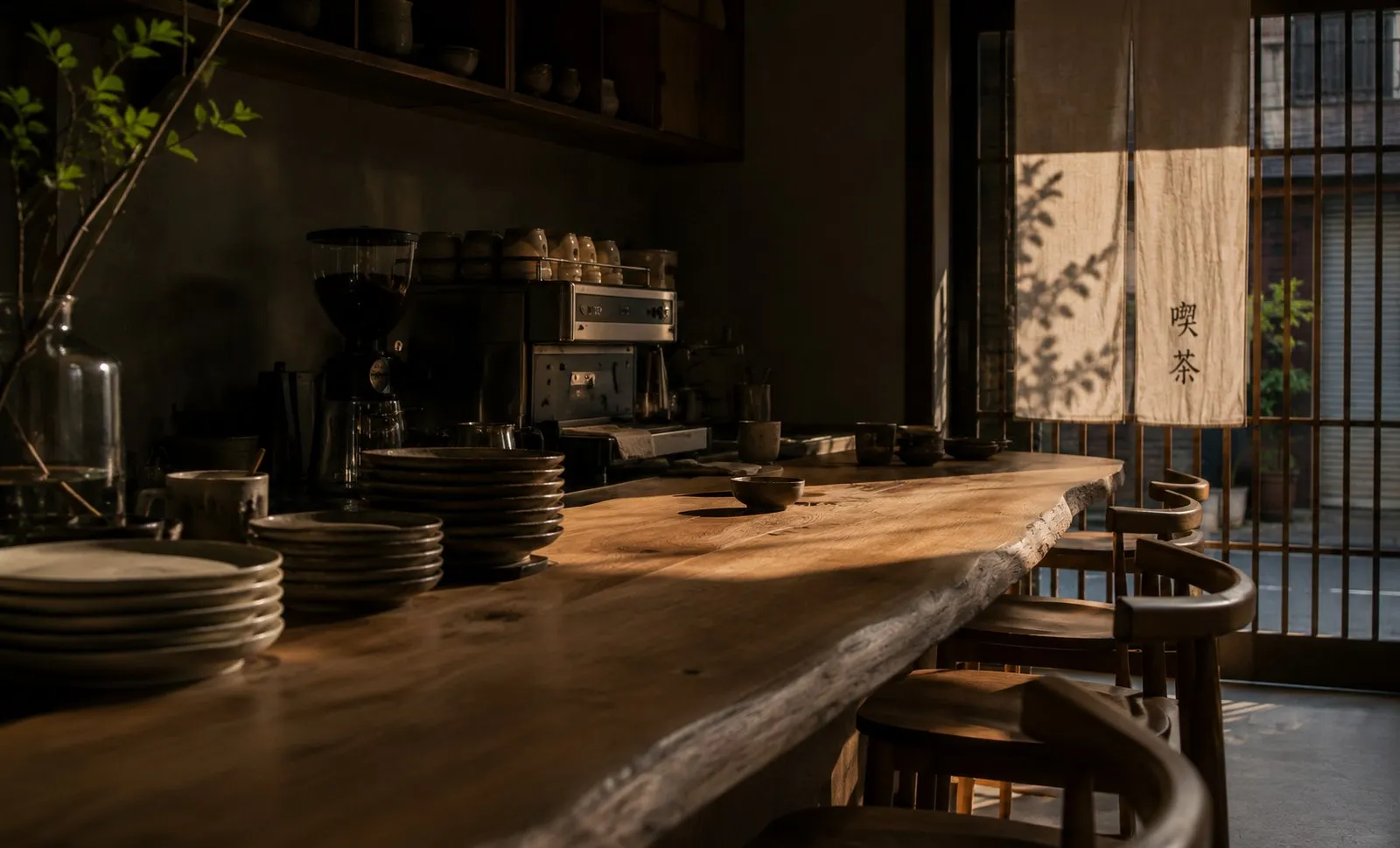
Opening a Food & Beverage venue in Japan isn't harder than anywhere else: it's different. The barrier isn't capital or concept, it's execution: a chain of administrative, property and human steps where every mistake is paid for in weeks and in yen.
Before you sign anything
The most expensive reflex is to start with the space. Before viewing a single location, three things must be clear: your legal structure, your residence status, and an honest estimate of your opening cash requirement, key money included.
The most common form for a serious project is the kabushiki kaisha (株式会社), though a gōdō kaisha (合同会社) is often enough to start. The choice has consequences for your visa, your tax position and your credibility with landlords.
The licences you cannot skip
Two authorisations come up almost every time for a restaurant or a bar:
- Food service permit (飲食店営業許可), issued by the public health centre after an inspection of the premises.
- Late-night alcohol service notification (深夜酒類提供飲食店営業), mandatory if you serve alcohol after midnight.
Each licence has its own lead times and compliance conditions: extraction hood, ventilation, water point, fire exit. Anticipating the inspection while the build-out is still on paper saves you from redoing a fit-out that is already installed.
It's not the concept that fails. It's the execution.
The lease and key money
The Japanese commercial property market has its own codes. Beyond the rent, expect reikin (礼金, "thank-you money", non-refundable) and shikikin (敷金, security deposit), each often equivalent to several months of rent.
Many landlords remain cautious with foreign operators. A solid file (an established company, a guarantor, a clear business plan) changes the conversation. This is where a local network makes the difference.
Hiring and suppliers
The quality of an opening depends on the team and the suppliers locked in beforehand. Hospitality hiring in Tokyo is tight: getting the offer, the contracts and the service culture right from day one is what determines retention.
The mistakes that cost dearly
- Signing a space before validating that the licences are feasible.
- Underestimating the opening cash requirement, key money included.
- Importing a concept without adapting it to local service expectations.
- Neglecting post-opening operations, the real filter between lasting and closing.
That is exactly where Dodai Studio comes in: we turn this list of steps into a project you can execute, and we can then take on the operation if you want us to.
A word on the timeline, because the published ranges mix two periods that have nothing to do with each other. On the projects we support, a complete file takes six to twelve months. What decides the length is neither the building work nor the licences: it is the time needed to find the right premises.
Once the lease is signed, the target is three months to opening, building work included.
The rule comes from simple arithmetic: from signature onwards, every month of rent paid without trading is a straight loss. Our job is therefore to prepare everything during the search, so that signing triggers execution rather than a start. A file that is ready on the day of the lease is worth several months of cash.

The letter
土台 Journal, every week.
The restaurants and shops that have just opened in Tokyo, found on foot. Past issues are readable in full, with no sign-up.
Read next
Practical guide
Japan's tax-free shopping changes on 1 November 2026: what retailers need to know
On 1 November 2026, Japan switches to a refund system for tax-free shopping. Tourists pay the tax at the till and get it back once customs has checked their purchases. A shop, a department store or a foreign brand that sells to visitors will have to change how it prices, refunds and reports each sale.
Practical guide
Pop-Up Store in Tokyo: The Complete 2026 Guide
From a gallery rented for a weekend to a department store stand: the pop-up formats in Tokyo, the venues and their rates, what you can settle without a Japanese company, and the timeline to plan.
Practical guide
Your head office is abroad: the five ways to open in Japan
Subsidiary, branch, representative office, master franchise, joint venture. What each form changes for the lease, the licences and the money.
A guide informs. A project needs a closer look.
Let's look at yours.
Book a 30-min callA costing rather than a conversation? Request a quote