Analysis · Operations
Your Dining Room Is Full, Your Account Is Empty: Three Invisible Leaks
Average net margin in Japanese food service has fallen to 5.2%. Three losses nobody sees, because nobody measures them.
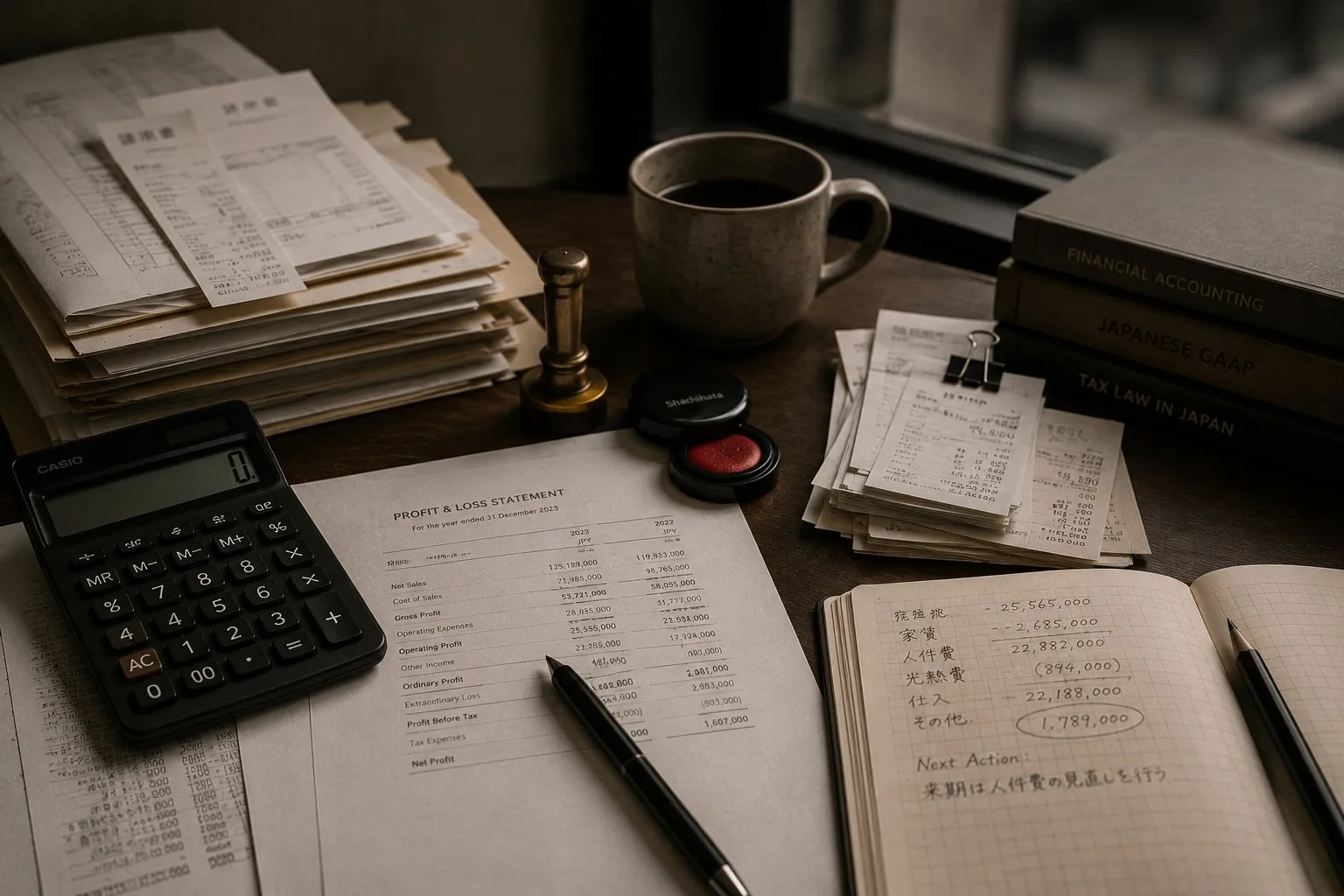
A restaurant owner told us once: my dining room is packed every night, but I have not paid myself in six months. He is not alone, and it is not only a story about costs going up. It is a story about losses nobody measures.
What a Japanese restaurant actually earns
Average net margin in Japanese food service has fallen to 5.2%, down from 8 to 12% four years ago. Labour now takes 38.5% of operating costs, against 35.2% in 2020, and raw materials rose 8.1% in 2023 alone.
Everything costs more, that much is fact. It is not the whole explanation. Most struggling houses carry invisible leaks: losses that cannot be seen, because no indicator is looking at them.
Leak 1, you do not know which dish pays
This is the most common one. The owner knows the selling price of every dish and, roughly, the cost of the ingredients. They have never worked out the margin per dish, weighted by sales.
One example, from an audit at a neighbourhood Italian. Two dishes on the same menu, two opposite stories:
| Dish | Share of sales | Margin |
|---|---|---|
| Pizza margherita | 35% | 62% |
| Gnocchi with imported burrata | 8% | 18% |
Nobody in the house knew. We recalculate the real food cost of each dish rather than the theoretical one, trim, mistakes and comps included, then weight it by volume. It almost always turns up one or two dishes dragging the entire bottom line down on their own.
In sit-down dining, food cost should hold between 28 and 32% of revenue. Above 35%, the question is no longer whether the menu is any good.
Leak 2, rotas that ignore the traffic curve
How many houses keep four people on the floor at two o'clock on a Tuesday, for three covers? The problem is not the hourly rate, it is the gap between the rota and the actual revenue of that slot.
Most operators read labour cost at month end, as a single line. They cannot see that Wednesday afternoon runs at an 85% ratio for three hours straight, nor that Friday evening is one pair of hands short at the rush.
Crossing till data with the rota shows both at once. Realigning them usually returns 15 to 20% of the labour cost without touching service quality, and sometimes while improving it.
Leak 3, the costs nobody renegotiates
In Japan a great many costs are negotiable. Independent operators either do not know it, or do not dare.
- Platform commissions: Uber Eats and Demae-can can be renegotiated as soon as volume is steady.
- Consumption tax: the regime depends on status and thresholds, and is almost never revisited after opening.
- Gas and electricity: renegotiable every year, which 70% of small houses never do.
- Food waste: a specialised contractor often comes in at half the price of municipal collection.
For a small restaurant these four lines easily add up to 40,000 to 80,000 yen a month, or 500,000 to 1 million yen a year. That is half a salary sleeping inside contracts nobody has reopened since opening day.
The real problem, no dashboard
These three leaks share one trait: they are invisible without indicators. And the answer is not to spend nights in a spreadsheet, it is to follow five numbers.
- Real food cost, daily.
- Labour cost ratio, by time slot.
- Margin per dish, weighted by sales.
- Gap between projected and actual revenue.
- Occupancy rate, by service.
Twenty minutes a week on five numbers beats one audit a year.
Putting those indicators in place and holding them over time is what we do during a turnaround.Turning your business around
Sources
- WorldMetrics, Japan Restaurants Industry Statistics 2026
- Gitnux, Japan Hospitality Restaurant Industry Statistics 2026
- BusinessDojo, Japanese Restaurant Profitability Guide 2026
- Food & Beverage profitability audits run by Dodai Studio in Tokyo

The letter
土台 Journal, every week.
The restaurants and shops that have just opened in Tokyo, found on foot. Past issues are readable in full, with no sign-up.
Read next
Analysis
Foreign brands in Japan: what made Starbucks, IKEA and Pierre Hermé succeed
Starbucks runs more than 2,000 cafés in Japan. Pierre Hermé opened his first shop in Tokyo before Paris, and IKEA made it on its second attempt. We went back over how they arrived, date by date, to see what worked.
Analysis
Shingyotai: how Japanese chains test a new concept
Pancho, Mos Burger, FamilyMart: six chains opened a new format in Tokyo in one year. How they test a concept, and what a foreign brand can take from it.
Analysis
Tokyo's burger market passes one trillion yen
A record market, funds bidding for the chains, and burgers sold at steak prices. What a foreign brand needs to know before entering Tokyo.
A guide informs. A project needs a closer look.
Let's look at yours.
Book a 30-min callA costing rather than a conversation? Request a quote