Analysis · Burgers
Tokyo's burger market passes one trillion yen
A record market, funds bidding for the chains, and burgers sold at steak prices. What a foreign brand needs to know before entering Tokyo.
November 2025. Burger King Japan, 348 stores and double-digit growth, is put up for sale: the Hong Kong fund that took it from 77 to 348 addresses gives Goldman Sachs first refusal. The same month, Teikoku Databank publishes its annual report, and the Japanese burger shop market passes one trillion yen for the second year running. The burger, a symbol of Japanese deflation for thirty years, has become an asset funds compete for.
A record market, and one moving upmarket
Teikoku Databank, Japan's major economic data agency, published its annual burger shop study in February 2026. The market is worth around 1,030 billion yen in operator sales for fiscal 2025, April 2025 to March 2026, up 2% year on year. It had crossed the one trillion mark for the first time the year before.
| Indicator | Value |
|---|---|
| Operator sales, fiscal 2025 | 1,030 billion yen |
| Year-on-year change | +2% |
| Fiscal 2024, first crossing | 1,016 billion, +7% |
| Stores across the ten major chains | 5,300, +1.6% |
| Annual household spend, 2023 | 5,929 yen |
| The same, twenty years earlier | 3,161 yen |
Teikoku Databank gives three reasons for the push. Chains first managed to pass rising costs into prices, raw materials, logistics and labour included, and the Japanese customer accepted it. The market then polarised: on one side the convenience burger, locked down by McDonald's, on the other the experience burger, carried by MOS, Burger King and the gourmet shops. The two poles pull each other up. Then tourism: with more than 40 million foreign visitors in 2025, wagyu burgers and Japanese concepts have become direct draws in high-flow districts.
Two poles, two logics
The first pole is a wall. McDonald's Japan means 3,045 stores, 888.6 billion yen in systemwide sales in 2025 and forty-three consecutive quarters of same-store growth. Japanese analysts no longer describe it as a fast food chain but as a piece of everyday infrastructure. Behind it, Lotteria with around 400 stores, Freshness Burger with around 140, and Domdom Hamburger, the oldest Japanese chain, founded in 1970 and in full revival, share the rest. Nobody attacks McDonald's on its own ground, and doing so would be a mistake.
The second pole is where the ground is still open. MOS Burger runs around 1,300 stores in Japan and more than 400 abroad, for 102.7 billion yen in the year ended March 2026, and is moving beyond the restaurant with the launch of MOS Deli frozen products and the acquisition of obon de gohan. Burger King Japan went from 77 stores in 2019 to 348 in March 2026, targeting 600 addresses and 120 billion yen by the end of 2028; the sale under way prices that trajectory in, it does not call it into question. Shake Shack holds 18 stores for its tenth year in Japan, including four openings in 2025 and a first airport location, at Narita.
And MOM'S TOUCH, the Korean chain, opened its flagship in Shibuya after a pop-up that drew 33,000 visitors in three weeks. Proof that a foreign brand can still create the queue.
The smash burger, the accelerating wave
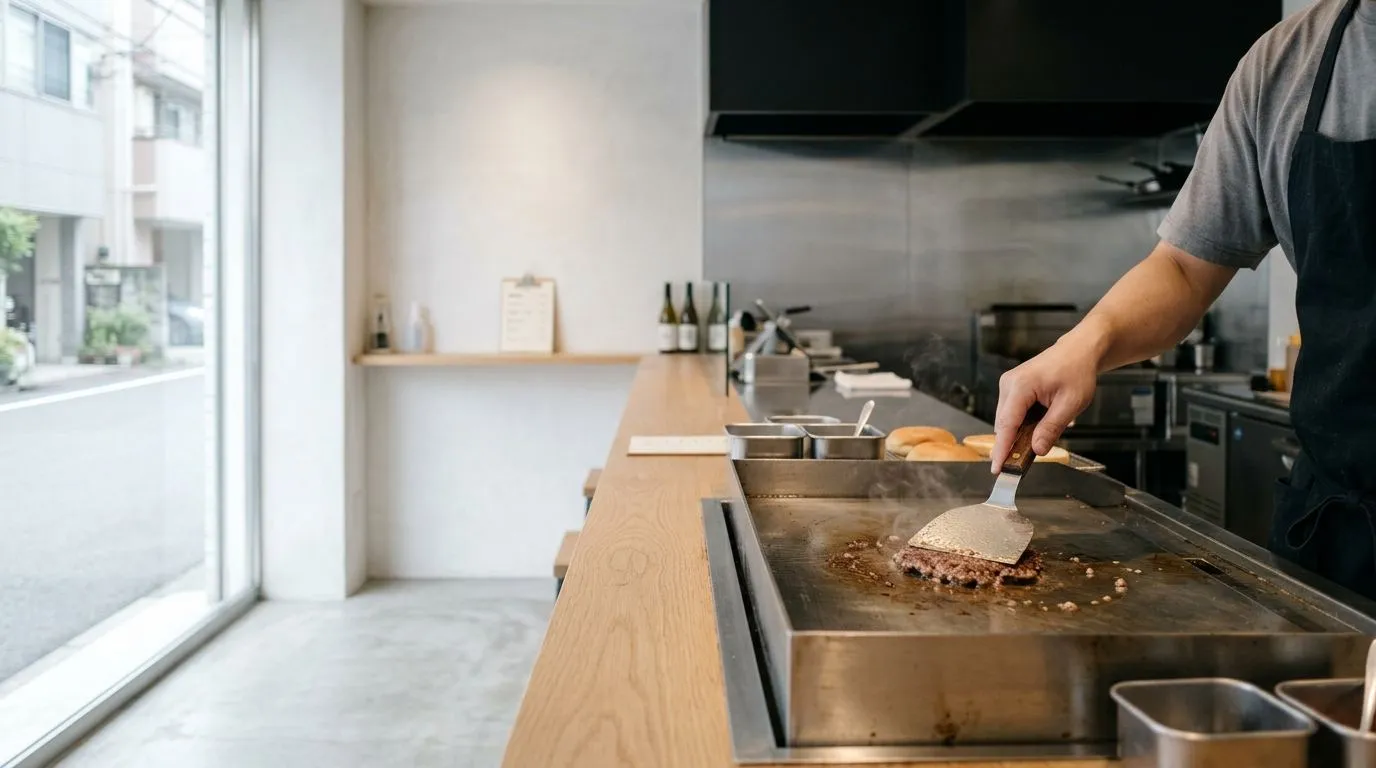
The technique is simple: a patty smashed onto a very hot griddle, crisp edges, a soft bun. It came from the United States, has been settling into Japan since spring 2023, and is not slowing down.
- Mikkeller Burger: in Futako-Tamagawa, the former Mikkeller Kanda, credited with popularising the smash in Japan, grinds its Japanese and New Zealand beef blend every morning.
- TEDDY BROWN: in Hiroo, opened in April 2025, a 100% Japanese wagyu smash with a custom-developed bun, now in the Tabelog Hyakumeiten 2026.
- Neo Nice Burger: in Shibuya, launched by the I'm Donut? team, an entirely house-made Angus smash from 450 yen, gourmet at fast food prices.
For a brand coming in, this is the most rational format: one griddle, a short menu, an entry price around 1,200 to 1,600 yen, and a look the press picks up readily. There is still no national smash champion in Tokyo.
Wagyu, the first tourist argument
Teikoku Databank states it plainly: wagyu burgers have become a major draw for foreign visitors. Japan has a unique raw material, and tourism has turned it into a selling point.
THE WAGYU BROTHERS, in Asakusa since November 2024, serves a zabuton steak burger at 4,295 yen on A5. HIROKIYA, in Roppongi, backed by the yakiniku brand of the same name, makes a 100% A5 patty with no binder and had a flying start in June 2025. Gui's Burger, first in the Tabelog Hyakumeiten 2026, picks its producer daily, Miyazaki today, Shimane tomorrow, for 1,600 yen.
From 1,600 to 4,300 yen: the Japanese consumer now accepts burgers at steak prices. Five years ago that was unthinkable.
The fourth wave, artisan gourmet
Food journalist Mayumi Ri describes a Japanese burger cycle in four movements. The chains in the 1970s. Regional burgers, the Sasebo Burger type, in the 2000s. The arrival of foreign gourmet brands with Shake Shack in 2015. And today a generation of shops making everything in house, from the bun to the ketchup.
The Tokyo references are established: I-Kousya, a pioneer since 2003, relocated in July 2025 and switched to a griddle; Fire House in Hongo, an institution since 1998; Burger Mania in Ebisu and Shirokane, Japanese beef and a naturally leavened bun; Reg-On Diner in Shibuya; Brothers in Nihonbashi.
The figure to keep: 200 new burger shops opened in Japan between December 2024 and November 2025, according to Tabelog. And the niches keep multiplying. SABURO 36, in Kiyosumi-Shirakawa, works a 100% beef tongue patty. Nagisa, in Kamakura, cooks its burgers over a wood fire. apple Burger, in Hongo, dares apple and cinnamon at 1,903 yen.
What it actually costs
Orders of magnitude, to be refined against a specific space.
| Line | Order of magnitude |
|---|---|
| Deposit and key money | 6 to 10 months of rent upfront |
| Fit-out, takeaway kiosk | 10 to 15 million yen |
| Fit-out, full seated service | around 30 million yen |
| Total budget, compact first location | 15 to 30 million yen |
| Timeline, incorporation to opening | 12 to 18 months |
Three Japanese specifics are worth knowing before signing anything.
- The licence attaches to the place, not the brand: every space goes through the public health centre inspection, with the 食品営業許可, a designated hygiene manager and HACCP procedures.
- The lease often requires a guarantor: usually a paid guarantee company, to be built into the cash plan.
- Labour is the critical line: a structural shortage and foreign visa programmes tightened since 2026. That is what sets the opening pace, not the construction.
Our read for a foreign brand
- The smash is the most rational way in: contained upfront investment, short menu, accessible price, a media wave under way, competition still fragmented. Wagyu is the premium argument to add for visitors, not the core of the model.
- Do not attack McDonald's on price: the convenience pole is locked. The game is played on experience, a visibly better product, a house-made bun, a story that tells itself.
- Tokyo first, as proof: a first location that produces real data, then expansion. Shake Shack and Burger King both did it, each in their own way.
- Tourism accelerates, it does not carry: the visitor does not come back all year. The model has to hold on the local customer, with the tourist on top.
- Japanese fixed costs are the real risk: rent, deposits, labour. The burger in Tokyo is won on operations, not on the concept.
The timing, in one sentence: the category is growing, funds are validating it, consumers accept premium prices, and there is still no premium burger leader in Tokyo. Leases, suppliers and hiring are exactly what we prepare with a founder.Opening in Japan
Sources
- Teikoku Databank, annual burger shop study, fiscal 2025, February 2026
- Miwa Daisuke, food service analyst, Yahoo News Expert, August 2026
- Time Out Tokyo, the ten best burger shops in Tokyo in 2025, December 2025
- News On Japan, The Rise of Gourmet Burgers in Japan, March 2024
- Tabelog, Hyakumeiten burgers 2026
- MOS Burger, official inbound site
- Japanese press, Burger King Japan put up for sale, November 2025
- JNTO, inbound tourism 2025
Frequently asked questions
How big is the burger market in Japan?
Around 1,030 billion yen for fiscal 2025, according to Teikoku Databank. The market crossed one trillion for the first time the year before and keeps setting records.
Is the burger market growing in Tokyo?
Yes, driven by price rises consumers have accepted, the split between fast food and the experience burger, and tourism. 200 new burger shops opened in Japan between December 2024 and November 2025.
What is a smash burger?
A patty smashed onto a very hot griddle, with crisp edges. The format reached Japan around 2023 and remains the strongest trend for a new entrant.
What does a premium burger cost in Tokyo?
From 1,200 to 1,600 yen for a classic smash, from 1,600 to 4,300 yen for a wagyu. The Japanese market now accepts steak prices.
What does it cost to open a burger shop in Tokyo?
From 15 to 30 million yen for a compact first location, deposits, fit-out, equipment and working capital included. Allow 12 to 18 months between incorporating and opening.
Who are the direct competitors for a foreign brand?
On the experience pole, MOS Burger, Burger King Japan and Shake Shack. On independent gourmet, I-Kousya, Fire House and Burger Mania. The convenience pole belongs to McDonald's.

The letter
土台 Journal, every week.
The restaurants and shops that have just opened in Tokyo, found on foot. Past issues are readable in full, with no sign-up.
Read next
Analysis
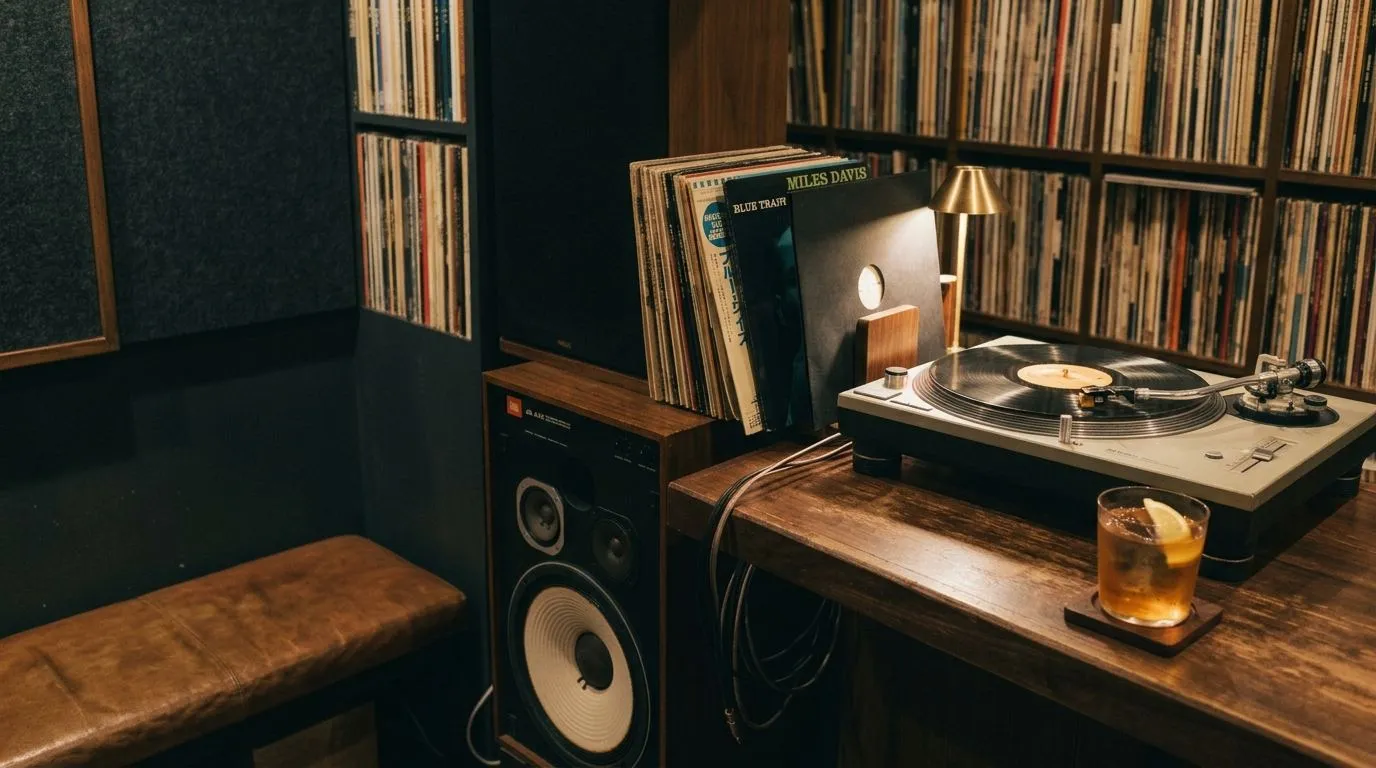
Why music bars are coming back in Tokyo
Two openings in seven days, a global wave and seventy years of jazz kissa. Where the format comes from, why it returns now, and what is still open to take.
Analysis
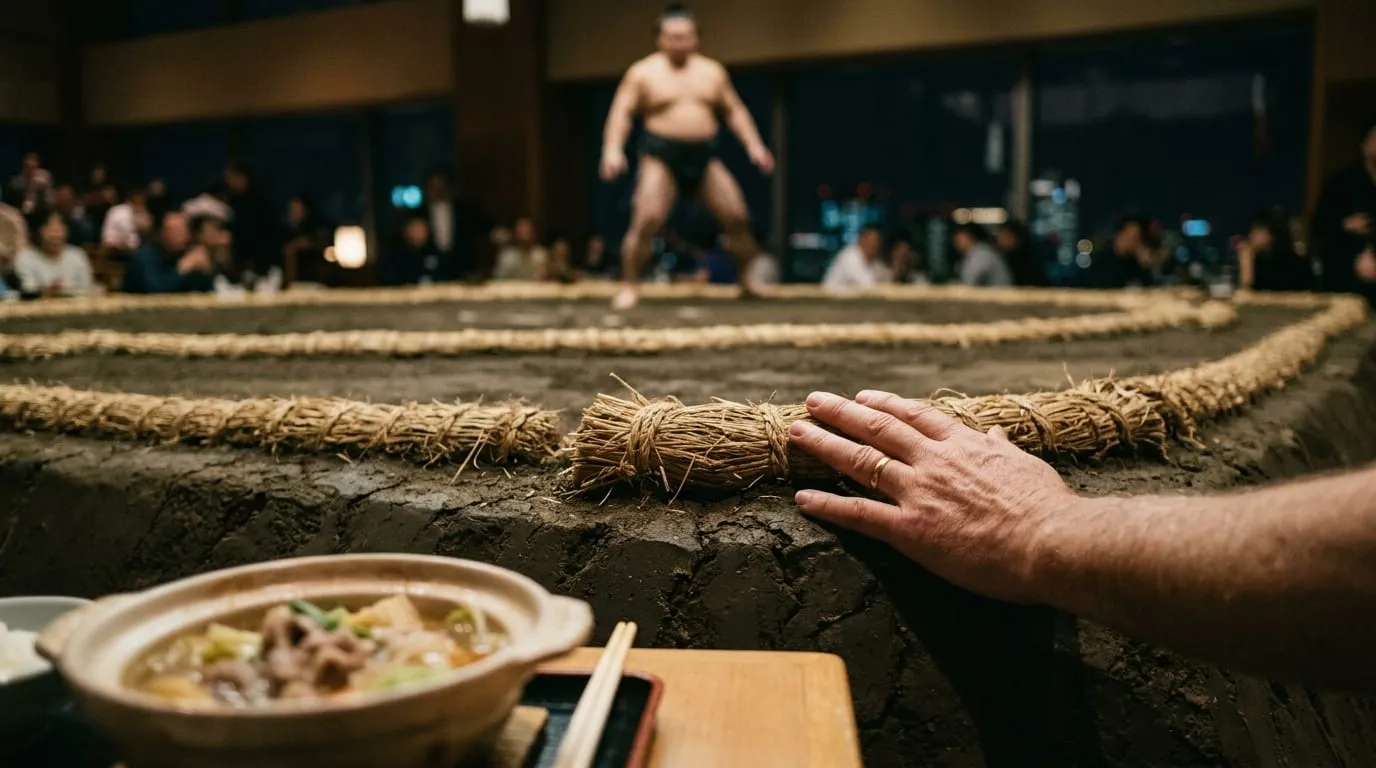
Customer experience is not a spectacle
42.7 million visitors and a shift toward experiences, with a misreading in the middle. What brings a customer back, and what does not.
Analysis
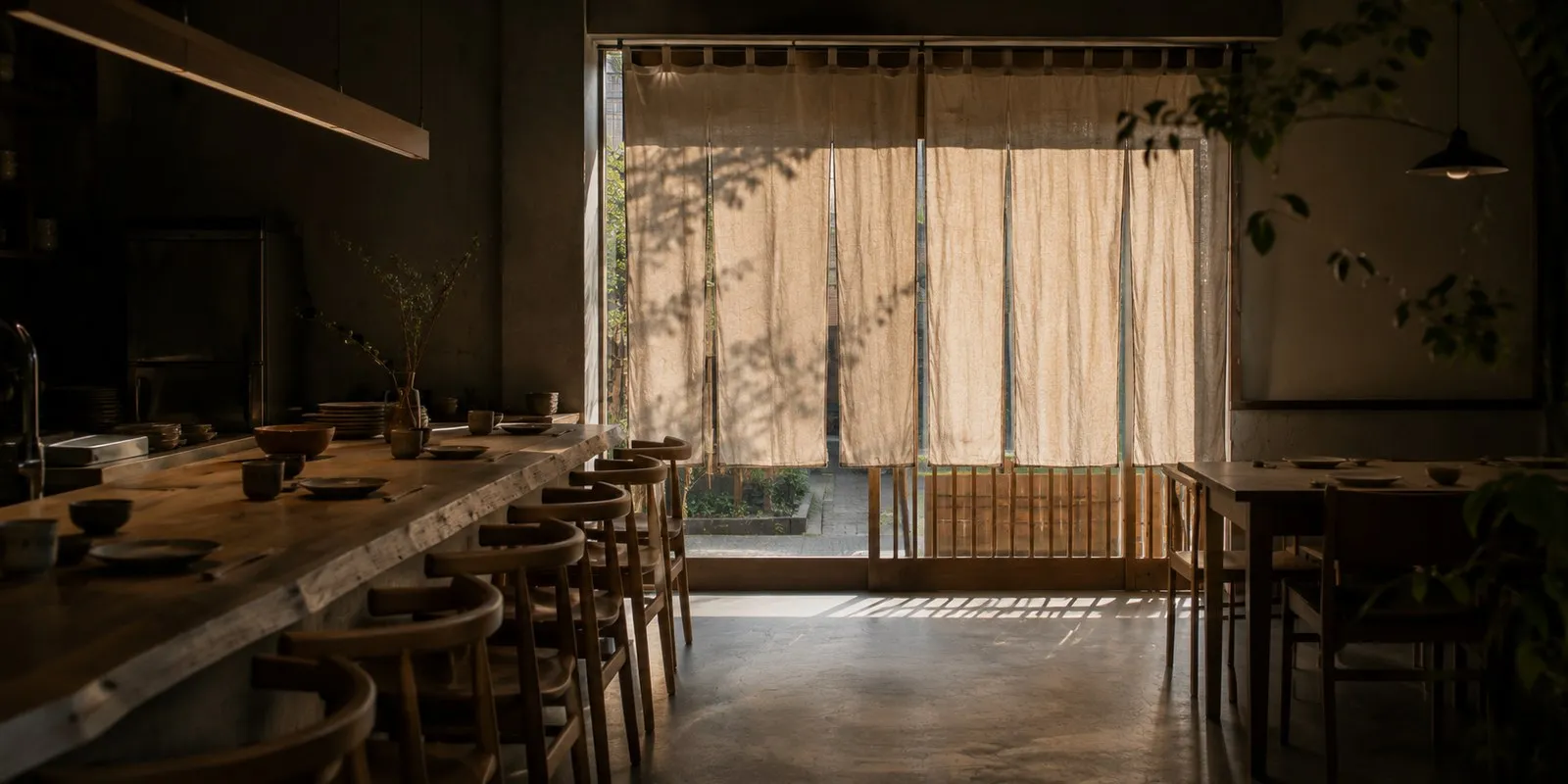
Why 30% of Tokyo Restaurants Close Within a Year, and How to Avoid It
Bankruptcies in Japanese food service are at record highs. Behind the figure, five causes that turn up in almost every file we audit.
A guide informs. A project needs a closer look.
Let's look at yours.
Book a 30-min callA costing rather than a conversation? Request a quote