Analysis · Turnaround
Why 30% of Tokyo Restaurants Close Within a Year, and How to Avoid It
Bankruptcies in Japanese food service are at record highs. Behind the figure, five causes that turn up in almost every file we audit.
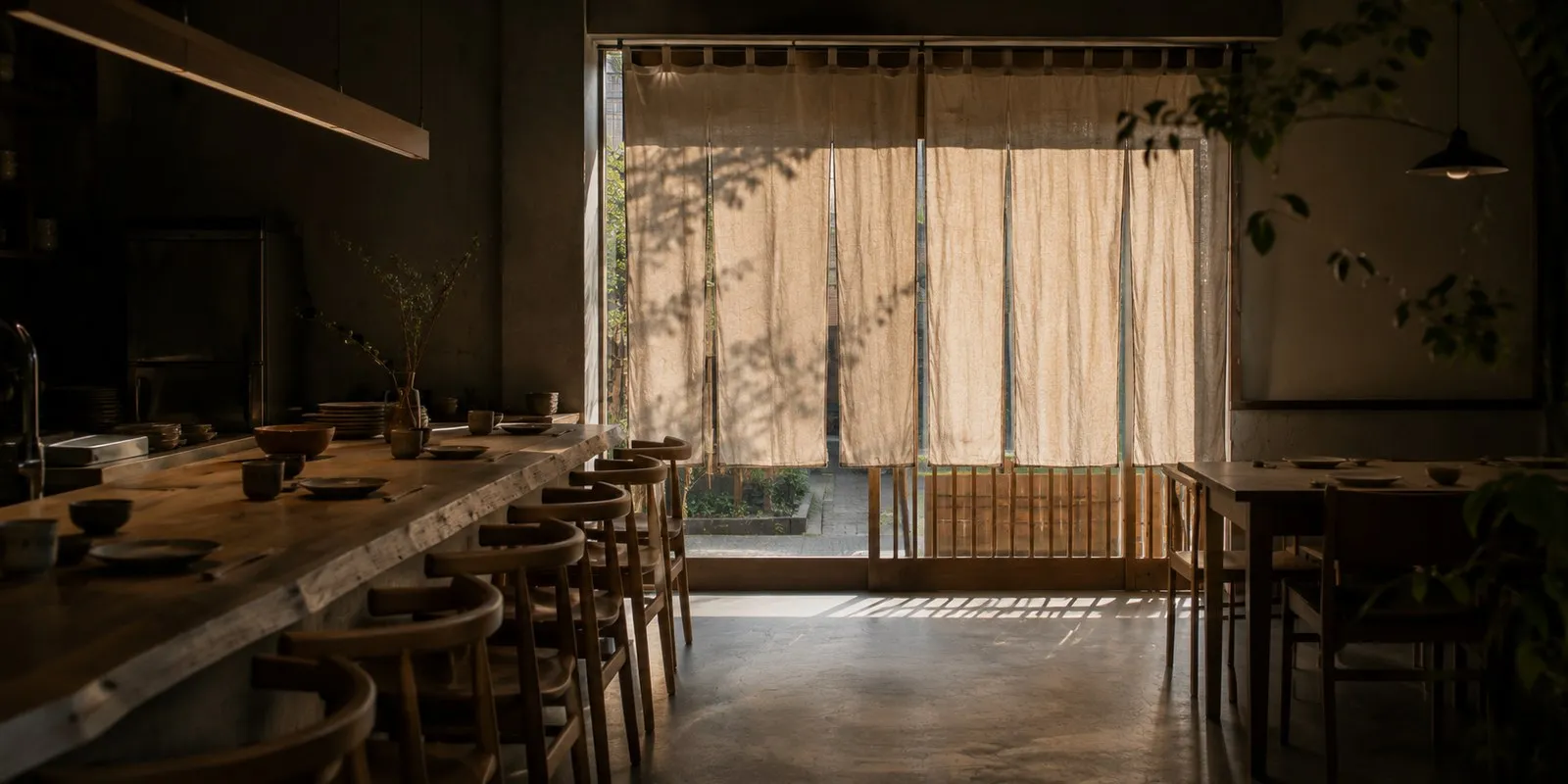
Tokyo has 160,000 restaurants, which makes it one of the most food-and-beverage-dense cities on earth. Yet one number keeps coming back: 30% of establishments close within their first year. Here is what we see behind that number, file after file.
What the numbers say
According to Tokyo Shoko Research, 411 food service companies went bankrupt between January and May 2026, up 2.2% year on year. That is an all-time record, and Teikoku Databank sees the same trend in its 2025 data.
These are not only small independents. Chains, franchises and established concepts appear on the lists. Put another way, the one-year survival rate sits around 70%. The filter does not sort by size, it sorts by how solid the foundations were.
Cause 1, rent eats the margin before opening day
Commercial rent in Tokyo is structurally high, but rent is not what kills. The entry ticket is: shikikin of 6 to 12 months, reikin of 2 to 6 months, agency fees, guarantor fees.
An operator signing a lease at 400,000 yen a month can pay out 5 to 7 million yen before opening. That money produces no revenue at all. It sits there.
The pattern we see most often: everything went into the space, and too little is left for the kitchen, the team and the cash reserve. The restaurant opens with depleted funds, and the first difficult month becomes an emergency.
Cause 2, the labour shortage and wage costs
Japan is going through an unprecedented staffing shortage in food service. In 2026 the country has 1.29 million unfilled hospitality jobs, and the suspension of the Specified Skilled Worker visa for the sector has made it worse.
- Bankruptcies tied to staffing shortages: double in a year, according to NewsOnJapan in June 2026.
- Bankruptcies tied to rising wages: up by a factor of 6.6 over the same period.
- Difficulty hiring cooks: 35% of operators name it as their leading problem.
The consequence is mechanical. Those who find staff pay more for them. Those who cannot cut hours or close on certain days, so they take less, so they pay less well. The spiral closes on its own.
Cause 3, food cost and inflation
Food inflation in Japan runs around 3% a year, but on some imported products the rise is far steeper. An operator who does not recalculate prices every quarter watches the gross margin melt without noticing.
The classic case: the menu has not moved in eighteen months, costs are up 15%, and the owner cannot work out why a full dining room is losing money.
Above 35% food cost, you are working for your suppliers.
In sit-down dining, food cost should hold between 28 and 32% of revenue. It is a figure to watch monthly, not at year end.
Cause 4, no systems
This is the common thread across almost every house we audit: no till tracking sales by item, no stock management, no hours logged, no usable data of any kind.
The owner runs on instinct. They know the month was good or bad, they do not know why. The best-selling dish is not the most profitable one, and nobody sees it go past.
The Japan Finance Corporation identifies weak management skills as a major factor in new operator failures. A properly configured till costs 300,000 to 500,000 yen, a specialised accountant 50,000 to 100,000 yen a month. That is not comfort, it is visibility.
Cause 5, the owner does everything
A restaurant is three jobs: the kitchen, the floor and the business. The struggling owner we meet is excellent at one of the three, most often the kitchen.
They cook ten hours a day, do the books at night and feed the social accounts on Sunday. They do not sleep, do not delegate and never step back. So there is no strategy, no trade-off, no anticipation.
The house holds until the grain of sand: one departure, one rent increase, one quiet month. The problem is not talent, it is an operating model resting entirely on one person.
What changes when the foundations are there
None of these five causes is inevitable, and none is solved by one more good dish. They are solved upstream, with figures that are kept, systems that are in place and a clear split between the three jobs.
On a project still opening, that means structuring the market study, the business plan, the site search, the sourcing and the hiring before signing anything. On a house that is struggling, it means a full audit of operations, menu, pricing and team, then an action plan held over time.
Restaurants rarely close because the food is bad. They close because the foundations were not there.
Turning an existing operation around is a trade of its own, and it is ours.Turning your business around
Sources
- Tokyo Shoko Research, food service bankruptcies January to May 2026
- Japan Forward, Restaurant Bankruptcies Hit Record High, January 2026
- NewsOnJapan, Restaurants Struggle Under Inflation and Labor Shortages, June 2026
- Statista, leading difficulties in Japan's restaurant industry, 2024
- Japan Finance Corporation, Survey of New Business Operators 2024
- Food & Beverage audits and operations run by Dodai Studio in Tokyo

The letter
土台 Journal, every week.
The restaurants and shops that have just opened in Tokyo, found on foot. Past issues are readable in full, with no sign-up.
Read next
Analysis
Foreign brands in Japan: what made Starbucks, IKEA and Pierre Hermé succeed
Starbucks runs more than 2,000 cafés in Japan. Pierre Hermé opened his first shop in Tokyo before Paris, and IKEA made it on its second attempt. We went back over how they arrived, date by date, to see what worked.
Analysis
Shingyotai: how Japanese chains test a new concept
Pancho, Mos Burger, FamilyMart: six chains opened a new format in Tokyo in one year. How they test a concept, and what a foreign brand can take from it.
Analysis
Tokyo's burger market passes one trillion yen
A record market, funds bidding for the chains, and burgers sold at steak prices. What a foreign brand needs to know before entering Tokyo.
A guide informs. A project needs a closer look.
Let's look at yours.
Book a 30-min callA costing rather than a conversation? Request a quote